Beyond the cold: precision engineering for the fruit and vegetable sector
In the fruit and vegetable sector, the value of a refrigeration system is not measured solely in kilowatts of power, but in its direct impact on the product: uniform ripening, containment of weight loss and commercial stability upon delivery.
These are measurable goals, yet difficult to achieve with standard solutions given the numerous variables at play – from product physiology to ventilation logic, up to the unique operating conditions of each facility.
Our approach is founded on these very variables. Refteco does not offer off-the-shelf products , but engineering solutions developed directly from the process requirements.
The 3 requirements in fruit and vegetable preservation
1. The microclimate: preserving quality and weight
dehydration and loss of texture are physiological effects amplified by a poorly managed microclimate:
- Too low relative humidity strips water from the product, reducing its commercial yield.
- Similarly, an excessive ΔT (temperature differential) between the cold room and refrigerant fluid – while cooling quickly – dehumidifies the environment and induces thermal stress that compromises the organoleptic quality.
For this reason, in the storage rooms for apples, kiwi and plums we employ what we call “gentle cooling”.
- We design air coolers and air evaporators with an increased heat exchange surface to operate at a low ΔT. This minimizes air dehumidification and preserves the product’s natural moisture content.
- Smart ventilation: we use electronic fans with adjustable rotation speed for rapid initial cooling to stabilize the product, followed by a holding phase with reduced ventilation to minimize stress on the fruit and optimize energy consumption.
- Efficient defrosting: for cold rooms operating near 0 °C (e.g., for kiwis), we implement systems with hot glycol defrost systems. These utilize the heat recovered from the condensation process, eliminating the need for electric heaters.
- Custom installation: we customize the plant engineering itself, for example, by supplying specific support structures for floor installations, demonstrating that every detail is designed around the specific needs of the facility.
2. The process: ensuring uniform ripening
Controlled ripening is a delicate biological process where air circulation and gas management (such as ethylene) must be extremely precise:
- non-uniform or unidirectional ventilation leads to uneven lots, with unripe fruit next to overripe fruit.
- Static air distribution fails to treat the entire mass uniformly, especially within the central pallets.
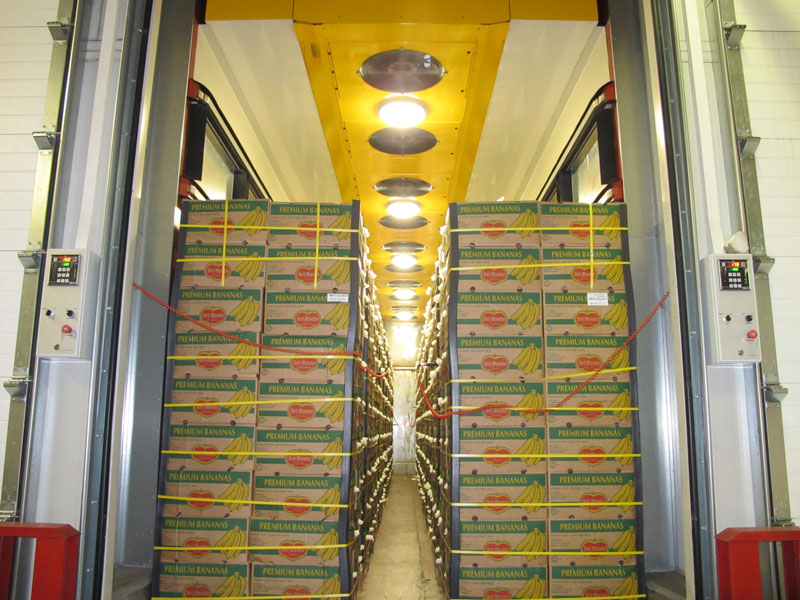
In our bananas ripening rooms, both for new installations and retrofit projects, we apply a “controlled dynamic ventilation” principle by integrating specific features into our air coolers or air evaporators:
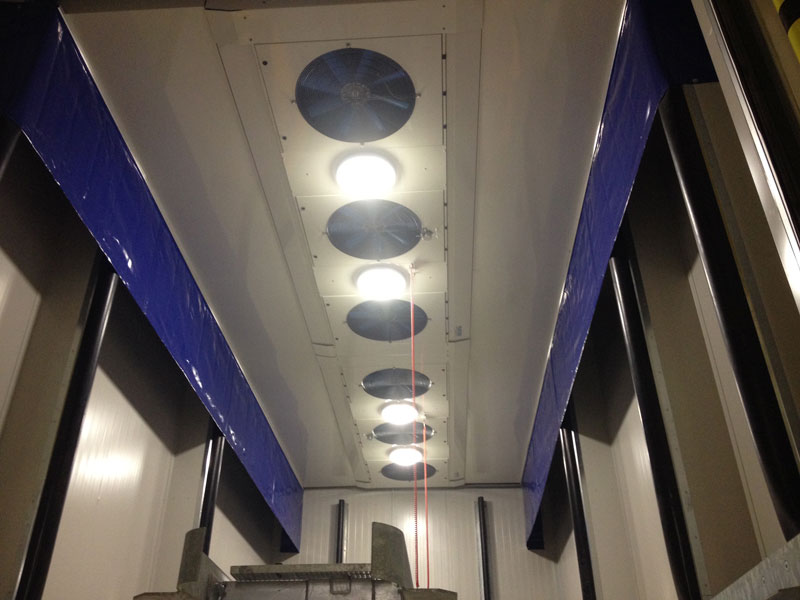
- reversible fans: these alternate airflow directions according to cycles and timing managed by advanced control logic, ensuring a homogeneous distribution of temperature and gas through every carton.
- Sealing and baffle panels: we design and supply custom vertical and horizontal sheet metal panels to seal gaps and force air through the product, eliminating bypass and recirculation.
- Tropicalized fan motors, designed to withstand humid and chemically aggressive environments, ensuring reliability and long service life.
The result is a batch with uniform color and texture, maximizing market value and reducing waste.
3. Operational efficiency: Optimize operating costs (OPEX)
Even a nominally efficient system can prove energy-intensive, especially if auxiliary processes, such as defrosting, are poorly managed:
- Electric heaters generate consumption peaks , increase “off-temperature” durations, and destabilize the microclimate.
- The overall COP of a system, or its overall efficiency, does not depend on a single component, but on the engineering integration of all its parts.
For berry processing and freezing plants, where customers demand maximum COP and low environmental impact, we apply a principle of “systemic energy efficiency”:
- hot glycol defrost via heat recovery applied on CO₂ evaporators to eliminate electric heaters, reduce costs and speed up the defrost cycle.
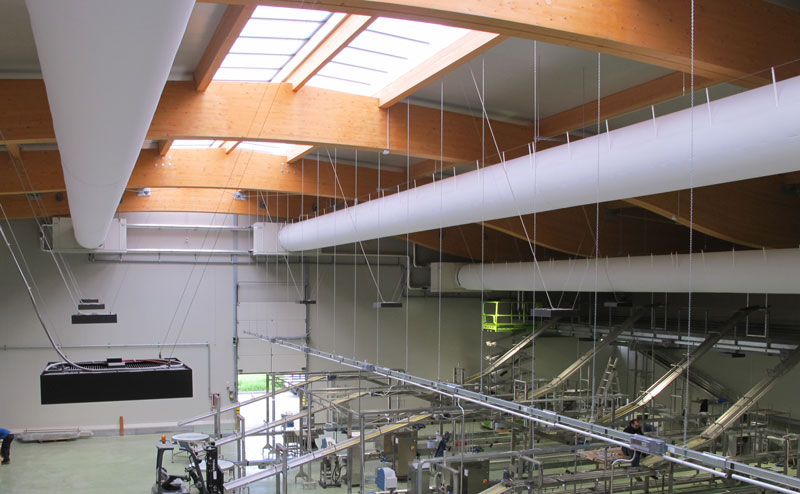
- high efficiency EC fans, electronically regulated, suitable for use with textile ducts up to 30 meters long, guaranteeing uniform airflow with minimal power consumption.
When “standard” isn’t enough: engineering for unique cases
Every project has variables requiring non-standard solutions. Refteco also works on technical commissions, customizing geometries, materials, and control logic based on physical limitations or specific environmental conditions.
A. The challenge of space constraints
In some fruit cooling facilities, installation height is extremely limited.
We designed special units that are longer and lower than standard models, equipped with high-pressure pressure fans. This customization ensures uniform product ventilation, resolving complex layout constraints without compromising performance.
B. The challenge of unique environmental conditions
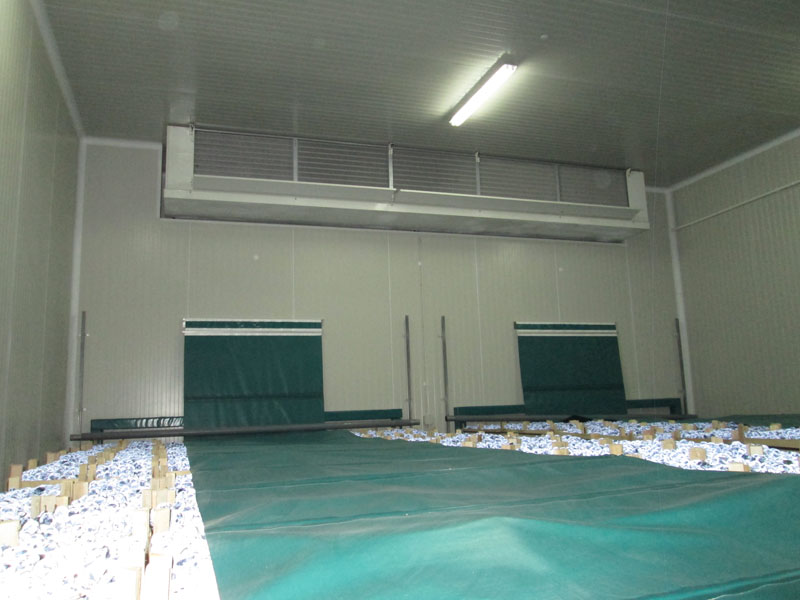
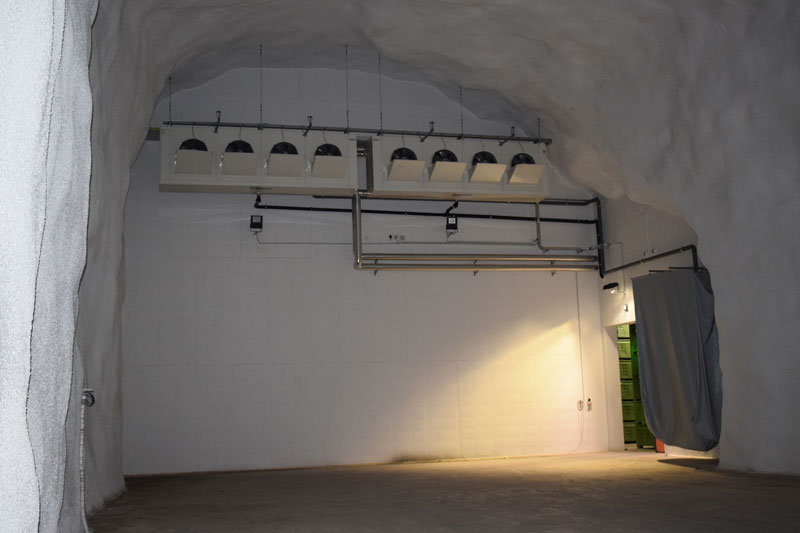
For an apple storage project located in underground caves, the goal was to integrate technology with a stable natural environment.
We supplied air coolers featuring low-consumption electronic fans and large-surface finned coils. This technology, combined with the natural conditions of the cave, created a very low energy consumption system, ensuring optimal temperature and humidity control.
Refteco is not just a component supplier, but a process engineer and system integrator. We start from the physiological needs of the product, design every detail around them, and measure the results against concrete parameters: weight loss, ripening time, homogeneity, energy consumption.
This is the difference between “making it cold” and designing value.
Your challenge is unique. Our solution will be too.
Contact our experts to discuss your specific needs and let’s design a system that protects and enhances your products.

REFrigeration TEchnological COmponents
For more information